
What Is Money Management? A Beginner’s Guide
This is a common question everyone ask
“Where does all my money goes?“
You Earn money, Pay bill, buy things, save some money and make financial decisions throughout the month.
Simply earning money does not automatically mean that you know how to manage it.
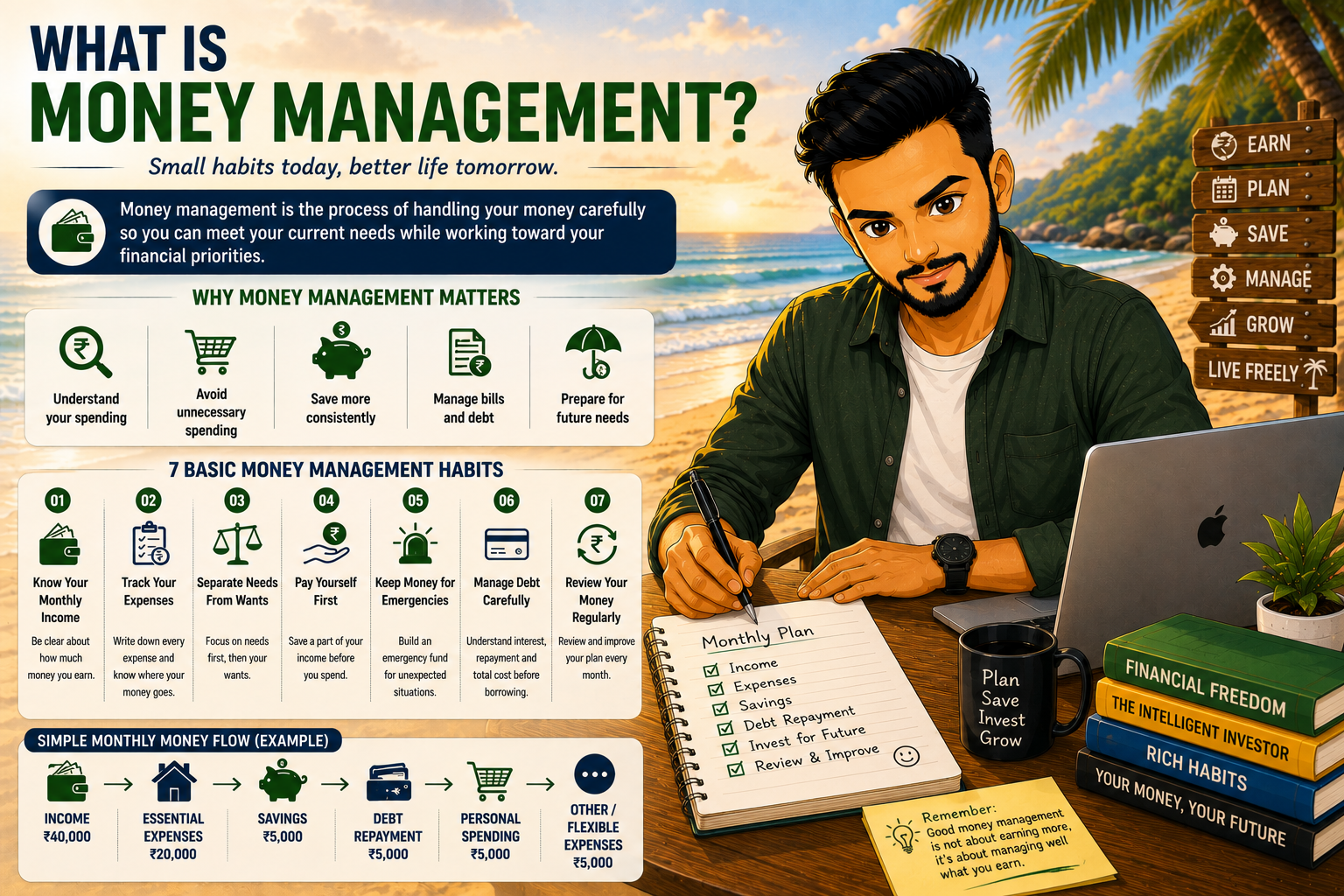
Money Management is the process your handling of money carefully so you meet your current need with working on future financial goals.
It Includes everyday Activity :
- Managing Expense
- track your Expense
- Saving Money
- Managing Debt
- Preparing your future needs
- Planning your cashflow
You can start with simple steps.
Table of Contents
What Does Money Management Mean?
In Simple Mean
Money Managment means to understanding how much your earning, where to spend goes and how want to use it.
Imagine You Receive a monthy income of ₹50,000
- Paying your essential expenses
- Buying thing you want
- Save money
- repay money
- Protection finance
- money toward future goals
Money management helps you how to spend and save the money wisely insteady of spending it without knowing how much you have left.
A Simple Formula
Income → Plan → Spend → Save → Review
Simple cycle can help keep you on track of your money.
Why Is Money Management Important?
Food Money Mangement can make financial life more organized and better.
It can helps you:
1. Understand Your Spending
You can see actually watch where the money goes.
2. Avoid Unnecessary Spending
Tracking expenses can reveal purchase that may not important.
3. Save More Consistently
when you plan your money, saving should be regular every month.
4. Manage bills and debt
Panicking in last minute, make a plan for repayment of debt every monthy.
5. Prepare for Future needs
Managing today’s money can help your future financial goals.
7 Basic Money Management Habits for Beginners
you don’t need complicated financial plan to begin.
here is a seven simple habits.
1. Know your Monthy Income
Start with the money that comes to your account.
For someone with salary and small amount comes from bonds or FD.
For someone wigh freelance or business income, that income may change every monthy.
Example
Monthy Income = ₹35,000
Starting point of your monthy plan we got it.
2. Track your Expenses
Understanding your where it’s goes every monthy.
to track your money use like:
- simple notebook
- spreadsheet
- track or apps
- banking apps
| Expense | Amount |
| Rent | 8,000 |
| Bill | 2,000 |
| Food | 5,000 |
| transportation | 3,000 |
| shopping | 2,000 |
| Enterainment | 2,000 |
| other expense | 4,500 |
Goal is to just become aware of where money goes.
once you know your money goes, you get better with financial decision.
3. Separate Needs From Wants
Understanding the difference betweens needs and wants is simplest way of money management.
Needs
Expense that are important and can’t be chnage every monthy. This expense require every month atleast minimum.
- Rent
- Food
- Bills
- Transportation
Wants
This Expense is we wish to spend but it is not important.
- buy a clothes
- extra shopping
- app subsription
- expensive gadgets
The Important thing you get exact amount of every monthy required and how much you needed in your wants purchased.
4. Pay Yourself First
Most Easily or without doubt just put money aside from income before spending single penny .
Example
Income comes every 2nd of every month. Put aside on same day that can’t be touch even if you want.
Income: 35,000
Saving: 5,000
Saving first is more effectively than save in later on.
5. Keep Money for Unexpected Expenses
Not every expense is planned.
some expense come in unplanned way.
example:
repairs of vehicles
medical bill for family members
Unexpected bill or travelling expense comes sometimes.
This is why Emergency fund is very important part of money managment.
Emergency fund is for unexpected but important of that situation like opreation deposit, foreseen etc.
Using your emergency fund in enterainment, shopping or luxury shopping should not be done. it is for unexpected finnancial needs only.
6. Carefully manage debt
Debt is a another part of money mangment.
If you know your debt or credit balance:
- how much money you owe
- at what rate of interest
- Your Monthy EMIs
- Your Repayment
- Total no. of loans or Total amount
Example
Loan should be managable with every month expense.
Before taking loan you should know your current debt status your repayment plan.
Borrowing money should be done in very decisive way so you can manage every time without regret.
7. Review Your Money Regularly
Money managment is not something done once and automatic goes every month or years.
You may get to change in:
- chnage in income
- changhe in expense
- higher rent
- new fianncial goals
- new family responsibility
it is useful to review you monthy money.
this helps to know:
- how much money spended?
- how much money in income change?
- how much money required in new financial goals?
- How much money required in wants and needs?
- Where am I can save more?
THis is a continous habits. it is a long journey of your life.
Money Managment Vs Financial Planning
These two terms sound same and closely related, but they are not exactly same.
Money Managment
Focus on handling your money effectively in everyday life.
Example
- Track expense
- paying bills
- save regularly
- manage debt
- finance protection
Finance Planning
Focus on create an plan towards future financial goals.
Examplw
- Puchase a house
- children higher education
- Setting Short-medium-long terms goals
- Preparing retirement
A simple way to remenber it
Money Managment = Managing today’s money
Financial Planning = Managing today’s money toward future financial goals
How To Start Managing Money Today
Today:
Write down your monthy Income
This week:
Track your expense.
This Month:
Create a Simple spending Plan.
Going Forward:
Set aside save money regularly and review progress.
this not change your financial journey overnight. It’s takes time to reach to certain point og financial goals.
FAQs
What is Money Management?
Money Management means manage and controlling your income expenses, saving and debt so you can use it effectively.
What is the First Step in Money Managment?
A First step for money managment is to know your income expenses and saving.
How can I Manage my money better?
Starting tracking your expense, understanding needs from wants, create financial plan, saving regularly every month and pay off debt effectively.
Is Money management the same as budgeting?
Not exactly. Budgetting is a important part of money managment. Money managment also includes like income, expense, debt, saving and money protection from unexpected situation.
Can I manage money even if my income is low?
Yes. Money managment can be useful in different level of income. Just amount of needs, wants and saving may change but principle will be same. steps to track expense, start saving, pay off debt first aare same in every level of income.
ink this article to:
- What Is Money? Meaning and Importance of Money
- What is Financial Literacy?
- Financial Literacy Vs Financial Education : What Is the Difference?
- What Are The 5 Main Areas of Personal Finance?
- What Is Financial Planning? A Beginner’s Guide
- What is Income?
- What is an Expense?
- What is Budget?
- What is Saving?
- What is Inflation?
- What is Investing?