Saving vs Investing: What’s the Difference and When Should You Do Each?

Saving vs Investing: What’s the Difference and When Should You Do Each?

When you start learning about Personal Finance, you often hear two important words: Saving and Investing

They sound same but different purpose.

Saving is mainly about keeping money afe and avilable for your shot -term goals.

Investing is about putting money into asset to grow money over period of time.

understanding the difference can help you to decide where your money shopuld go instead of simply keeping in saving account or investing everything without a plan.

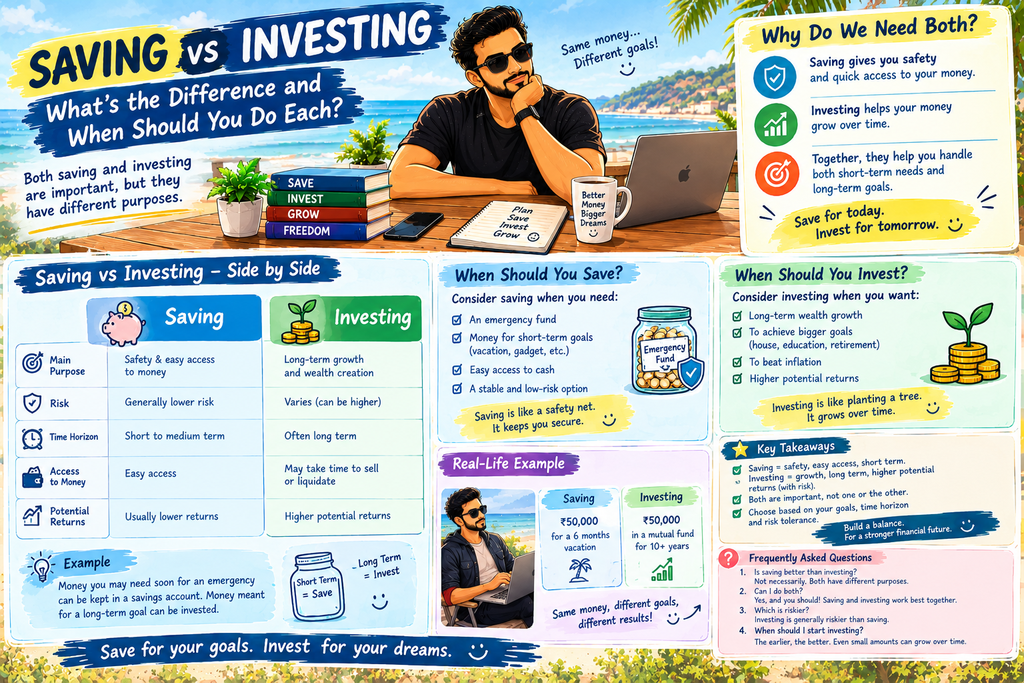
“Saving vs investing infographic showing a young man at a beachside desk, comparing saving for short-term security with investing for long-term growth, including differences in risk, time horizon, access to money, potential returns, and when to use each.”

What Is Saving?

Saving means keep aside part of your income insted of spending it.

You might save money for:

  • Emergency fund
  • New phone or laptop
  • vacation
  • Purchase a vehicle
  • Annual expense
  • Short term financial goals

The main focus of focus is safety and accessibilty.

Saving to be available when you need it.

What Is Investing?

Investing means Putting money into assets for longer period to grow and genrally income over a period a time.

Example:

  • Mutuals fund
  • Stocks
  • Gold
  • Bonds
  • Exchange -traded funds

Investing genrally for long term financial goals.

Investing is risky so no such gaurantee of returns. it is all linked to market.

Saving Vs Investing: The Main Difference

Easiest way to understand the difference is:

Saving protect money for short-term goals and investing is grow money for future goals.

FeatureSavingInvesting
Main purposeSafety and short-term needsLong-term growth
RiskGenerally lowerCan be higher
AccessUsually easierDepends on investment
Return potentialGenerally lowerPotentially higher
Suitable forEmergency funds and short-term goalsLong-term goals
Value fluctuationsUsually limitedCan rise and fall
Time horizonShort termUsually long term

Why You Need Both?

You don’t necessary to choose between saving and Investing.

A healthy financial plan is keep both in plan.

Think in your money as having different jobs.

Money for today and emergencies- saving

You mau need this money soon, accessibility and stability matter.

Money for future goals to grow – Invest

If you need create wealth and you want this money for longer time period .Investing is goopd option to grow your money.

Example:

Monthy – Expense – Savings – Investments

The amount for each catgeory depends on your Personal Situation.

When Shouls You Save?

Saving Should generally comes first for important short-term financial needs.

  1. Emergency Fund:

Before taking risky investment, build emergency fund is safety cushion for this type of circumstances.

This money can help for unexpected expenses or temporary loss of income.

2. Short terms Goals

If you need money within next few months ot in a year keep it in low risk and accessible place may be more appropriate than putting into volatile investment.

Example:

  • High value courses
  • Vehicle down payment
  • Annual Insurance payment

Stability becomes important when you neede in shorter period of time.

When Should You Invest?

Investing can make more money when you give your money loner period time it can be many years and you have tolerate to fluctuation in value.

Example:

  • Retirement
  • Long term wealth creation
  • Children future education
  • A long term Independence Goal
  • Other goals many years in future

Long term investing i still risk involves and right investment depend upto risk take ability and your goals.

What Happens If you Only Save?

Saving money is important but keeping all your money in low risk and low return sving for many year can create another problems.

Over long periods, rising prices can reduce what your money can buy.

Example:

Today ₹10 pen may cost more in the future.

This is th main reason people consider long term investing for future goals.

What Happens If You Only Invest?

Investing without maintaining accessible saving can create poblems.

The market go to low and you required some amount for urgent purposes.

You might need to forcefully withdrawn your investment when it is at it’s lowest.

This is why emergency fund is appropriate short term goals is important.

Investemnt are for future. Saving are your fiancial cushion.

A Simple Money Systems for Beginners

Layer 1: Daily Expense

  • Food
  • Rents
  • Bills
  • Transportation
  • other regular expenses

Layer 2: Safety Money

  • Short-terms goals
  • Emergency Fund
  • Unexpected expenses

Layer 3: Growth Money

  • Long-term investments
  • Retirement
  • Wealth-building goals

Common Mistakes to Avoid

Mistake 1: Investing Your Emergency Fund

Emergency money Should genrally for priporties safety and accessibility rather than maximum returns.

Mistake 2: Keeping long term money complelty idle

If money intended for goal many years away consider whether simple holding cash or low risk saving accounts.

Mistake 3: Investing Without Understanding risk

Never invest simply vecause someone promises high returns.

Understand what are you buying and how much you could potentially lose.

Mistake 4: Confusing Saving With Investing

Putting aside and investing money are not same thing.

Both are useful, but they solve different financial Goals.

Mistake 5: Ignoring your Goals

Your Fiancial goals should influence where you keep your money.

Vaction for next year, Early Retirement 30 years from now should not necessary be treated the same way.

How Much Should You Save and Invest

There is no single percentage that works for everyone.

Your income, expenses, debt, Financial Reponsinility and goals all matters.

Bindly making rule ask yourself first this question:

  1. Are my basic expense covered?
  2. Do I have an emergency Fund?
  3. What financial goals am I working towards?
  4. Which are short term goals and wjich are long term goals?
  5. Di i have expensive debt that needed attentions?

Once you understand these things, you can decide how much money should remain in savings and how much money should remain in Long-term Investing.

Saving vs Investing: The Easy Rule of Remember

Simple way to remember the difference:

Need the money soon?

Save it

Need the money many years from now

Consider investing it

Need Protection against unexpected expense

Build an Emergency Funds.

Want to Build Long term Wealth

Consider Investing it

FAQs

Is saving better than investing?

Neither is automatically better. There have different purposes. Savibg is useful for safety and shor-term goals, whil investing for long term goals and wealth creation.

Should I save before investing?

For many beginner, Building saving for basic essential monthy expnenses and emrgency fund should there so not create problems in between long term investing like urgent withdrawn for urgent purposes. It is important saving like safety cushion

Can I save invest at the Save time?

Yes. In Fact, many people use saving for short terms goals or needs and while investing for long term future goals.

Is Investing risky?

Yes. Market-linked investment can rise and fall in value. Higher potential returns genrally come with greater risk.

How Long Should I Invest My money?

Id dpends on your goals and investment. Long term investing is genraly good when you keep remains invested at as long as time period.

Link this article to:

What Is Inflation? How Rising Prices Affect Your Money

What Is Inflation? How Rising Prices Affect Your Money

Havwe ever noyiced that the same ₹100 cost good today get it in few rupees before years.

For Example:

Same Milk price of one pack fewer than today’s price.

Inflaction affection everyone and everywhere. It changes first cost ofd food, rent, education, fuel, travel, healthcare and daily needs. It’s also affect your financial situation like saving, investing, debts Rate of Interest or REPO rate.

Inflation is an increase or decrease of money power over peroid of time. you must aldo sure your money keeps maintaim it’s money purchase power.

Now, let’s understand the inflation in simple woprds.

And how to protects your financial future.

What Is Inflation?

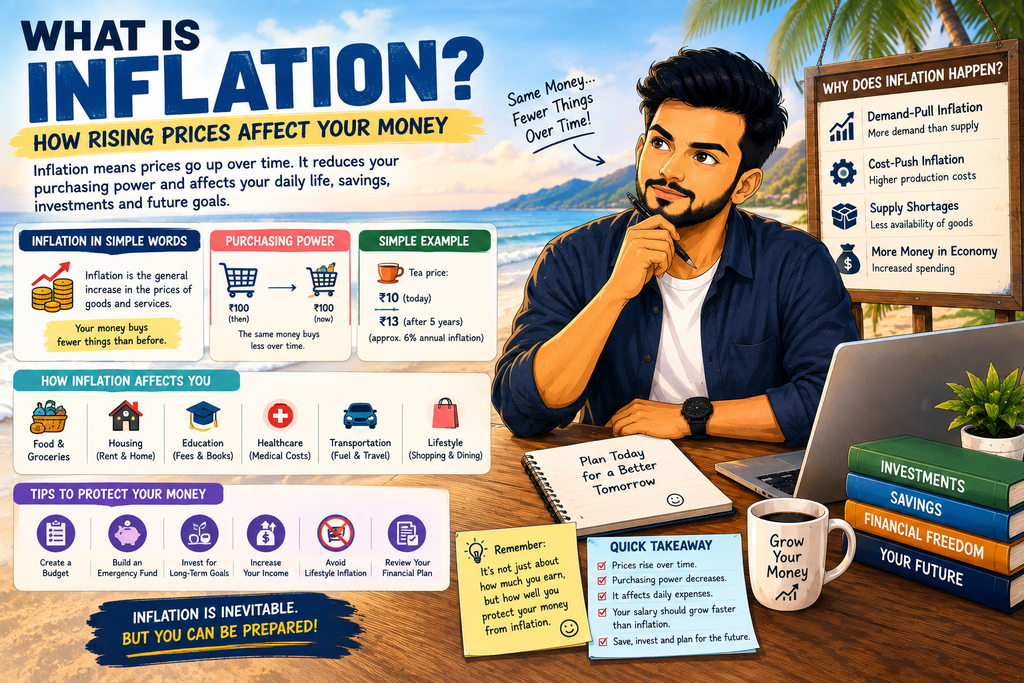
Inflation is the increase in the price of goods and services over period of time.

When Inflation increase purchase power of money gets decrease.

In Simple Words:

Inflation Means your money buys fewer things than before.

Example:

  • Earlier, ₹30 could buy three time Chaas of ₹10 each.
  • later, same things cost you ₹15 each.
  • Now, you can buy on two times.

Your money not get changed, your money purchasing gets value decreased over time period.

What is Puchasing Power?

Purchasing Power means how much good and service your can buy at that time.

When price rise, puchasing power deceased.

Example;

let’s say have 10,000 for home groceries.

  • Earlier you can buy many things that your basket gets over loaded with around 35-40 items each time.
  • Now you can buy just 20-25 items that your basket fill arounf 55% only and other ncessary items still remains to buy from it.

that thy your bank balance should be increase with time to keep purchase matches your needs and lifestyle.

Why does Inflation Happen?

How Is Inflation Measured?

Inflation Is commonly measured by tracking changes of price os good and service.

In India, Important inflation Indicators include

  • Consumer Price Index (CPI): Measues changes in prices paid by consumers.
  • Wholse sale Price Idnex (WPI) : Measure changes in prices by wholesle.

CPI is importan to underestand it’s affects your household expenses.

inflation genrally express in precentage form.

Example, In India 6% of inflation genrally there. It’s changes every year with peroid of time it may increase and decrease.

It very less chance that inflation gets decrease.

How Inflation Affects Your Daily Life?

Inflation can affects many set of your daily life.

Food And Groceries

Vegetables, dryfruits, Fruits, cooking oils, beverages alle get price when inflation increases.

Rent And Housing

Rent, house mainteance, repairs and home purchase cost may increase.

Education

School fees, tuition fees, exam fees, college fees, skilled course also fet increase prices.

Healthcare

Medical treatment, Medicines, Insurances and hospital cost may increase.

Transportation

Fuel, Public, Increase price of vehicle , vehcile mainteance cost may increase.

Lifestyle

Enteraiment, shopping and subscription may increase.

How Inflation Affects Your Saving?

Keeping money in cash for emergencies is good nut it’s decrease the purchasing power of money.

Let’s say you has ₹1,00,000 in liuid saving account.

If inflation at 6% after 10 years it value gets deceased value get to almost half of it around ₹55,000 only.

your money will same in saving amount money but it’s purchasing power will decreased by period time.

Inflation and Bank Deposits

Bank Deposits can provide safety and interest income but you try compare interest rate with inflation.

Example:

  • Inflation Rate: 5%
  • Interest Rate:6%

Your real reurns before tax is 1% onlyu.

Real Return

A simple way to estimate real return us:

Real Rteurn = Investment returns – inflation rate

Inflation and Your Salary

Inflation can decrease your value of money if your salry does not increase over time period.

If your salary does not increase with time , you may have less money to:

  • saving
  • investemtn
  • travels
  • Planned purchased
  • emergency expenses

How to Protect Your Money From Inflation

1. Create a realistic Budget

Track your expens and which cost is increase from pervious budget.

Budget can give ideas of how inflation affects your lifestyle.

2. Build an emergency fund

Keep enough money for unexpected expense such as Medicial, job loss or urgent repairs.

An emergency fund should be easily accessible within in hours and placed low risk products.

3. Invest for Long Term goals

Depending on your risk tolerence and time , lon term investment may help you to beat inflation.

Possible option like:

  • Mutual fund
  • Equity Investment
  • PPF
  • FD
  • Government Bond
  • Retirement Investment

Every investment had different risk, returns and tax rules.

4. Increase your income

Developing useful skills, improving your career or building side or other income can help you to manage increase price rise.

5. Avoid Unnecessary lifestyle inflation

Life inflation means salaryu rise and immediately uprading your expense like phone, home decor, vehicleetc.

6. Review your financial plan regularly

Your Goals, income , expense and investment may change with time.

Review your plan over a once a year.

What is Lifestyle Inflation?

Lifestyle Inflation means increasing your spending with increase salary.

Example:

Your salary increase from ₹30,000 to ₹40,000

Instead ro saving this increase difference you may:

  • upgrading your gadgets
  • order from apps
  • purchase unnecessary products
  • apps subscriptions
  • take longer loans

Your saving increase but your saving amount same

Better to increase in :

  • Saving
  • investment
  • Debt Managment

Inflation vs Deflation

FeatureInflationDeflation
MeaningGeneral prices riseGeneral prices fall
Purchasing powerUsually decreasesUsually increases
Consumer spendingMay happen earlier due to rising pricesMay be delayed because people expect lower prices
Business impactCosts may increaseRevenue and profits may decline
Common concernReduced purchasing powerSlower economic activity

Common Mistakes People Make About Inflation

Keeping all money in cash

cash is useful for emergencies but for long term saving may lose purchase power.

Ignoring inflation while planning

A goal should be consider with inflation future value.

Assuming Slary increases equal wealth growth

If expenses rise faster than income, your finacial situation will be same.

Spending every salry increase

Lifestyle inflation can prevent your saving from growing.

Forgetting taxes and fees

your actual returns adter taxes and cost may lower than expected returns.

FAQs

Is Inflation Always Bad?

A modernate inflation normal for economies. high or unpredictable can reduce purchasing power and financial stress.

Why does inflation reduce the value of money?

because the prices of goods and services, same amount of moneybuy fewer items and things.

How does inflation affect fixed deposit?

If the inflation rate higher than your deposits returns, your money may lose purchasing power over time.

Can investment protect against inflation?

Some investemnt may provide higher than inflation rate over long terms, but no investment is guarantedd to beat inflaton.

what is lifestyle inflation?

liofestyle inflation is habits of increasing spending whwnever your income increases.

Link this article to:

Good Debt vs bad Debt: What’s the Difference?

Good Debt vs bad Debt: What’s the Difference?

Debt is a Common part of modern life. People buy homne, buy vehicle, pay dor education and manage unexpected expenses.

Not all debt are same.

Borrowing may helps you build assest, improve your earning potential or achive important financial goals.

In this article, we’ll explain good vs bad debt in simple words, with rpactical tips and helps you to make better boroorwing decisions.

What Is Good Debt?

Good Debt is borrowing that may help your improve your financial situation over time.

It’s main purpose to make manageble repayment and potential growth over time.

Exapmles of Good Debt

1. Education Loan

Borrowing for education may help you to skills or higher qualification that improves future earing.

the benefit depends on your course and ability to repay the loan.

2. Business Loan

A business loan may helps you to improve machaniery, equipment, expand or invest in business .

Borrowing should be planned with realistic for future genrating income and repayment the loan.

3. Home Loan:

A home loan may helps you to buy a property and grow asset over time.

But home comes with big borrowing cost, unaffordable EMis or buying big comes some sort of stress in life.

4. Loan for Income-generating Equipment

Borrowing money for improves gadget or equipment to genrate money may helpful when your expected income justify your the cost

Important:

Good Debt is not guaranted to make wealthy. it matter that repyment, cost and purpose.

What Is Bad Debt?

Bad Debt is borrowing that may xreate financial stress without fincial benefits.

It Provise like high cost interest rate, unimportant spending or unmanageable repayments.

Examples of Bad Debt

1. High-Interest Credit Cred Debt

Taking loan on high interest rate credit card it’s gives you unmanageable of interest and EMIs may be later you can not affordable.

2. Borrowing for Unnecessary Shopping

Taking a Loan or Usisng Cedit card to Buying things you do not need can reduce your future income potential.

3. Borrowing to Maintain a Lifestyle

SPending on vacation, expensive dinner out, and luxury purchases may create financial pressure if you don’t have prayment plan or stable income.

4. Taking a New Loan to Repay old Loans

Repeatedly borrowing to cover existing loan debt cane be dangerous cycle.

It may increase your stress and repayment burden. it make har to debt free for whole life.

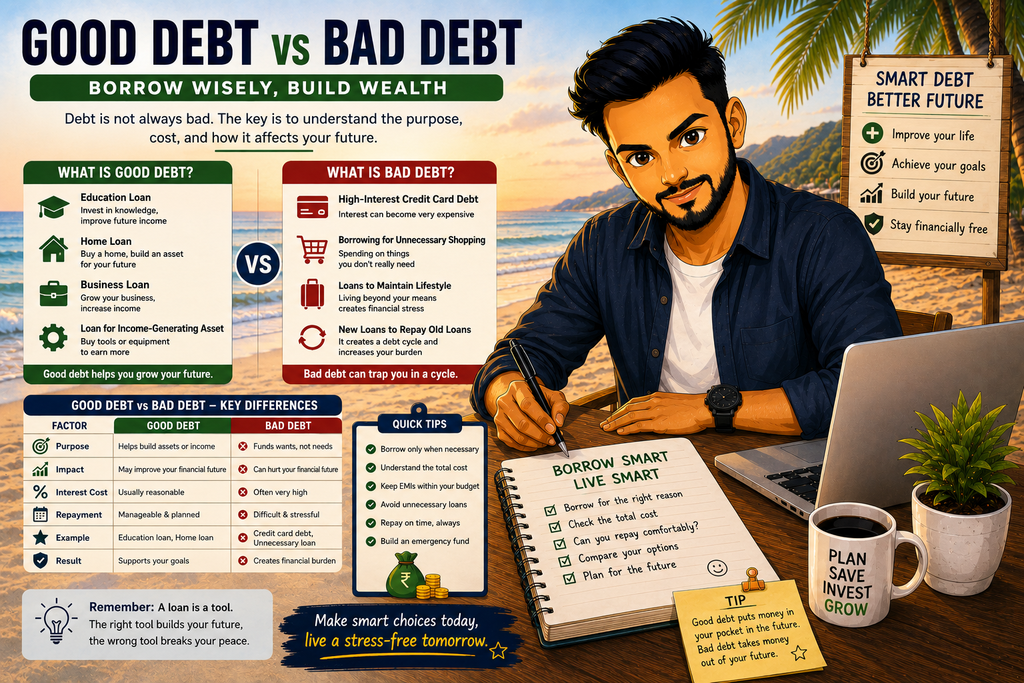
Goood Debt vs Bad Debt:Key Differences

FeatureGood DebtBad Debt
Main PurposeMay improve financial SituationOften Fund for unimportant necessary
Potential BenefitEducation, assets or incomelimited or no benefit
Repaymentshould be managablemay be diffcult
Interest rateshould be reasonableCane be expensive
ExampleSuitable education loancredit card loan
Main ConcernWheather benfits justify cost creates financial stress

Example:

Two people borrow ₹50,000.

Person 1: use money for education or skill course to increase your earning potential.

Person 2: Use money for umportant buying and shopiing and struggle to repayment it.

The amount is same , but purpose and repayment situation iis different.

That why understanding of debt matter.

Is Every Loan Good or Bad?

NO. Loan is not automatically Good or debt.

Same amount of loan or money may be help out and same loan for other person may be harmful .

Example:

Home loan with stable income maye be manageble and affordable EMIs.

Same loan with Unstable Income maye be unaffordable or create stress and gives more create debt to just repay.

Bedore Borrowing:

  • Why do I Need this money?
  • Can I afford the EMIs?
  • What is the total cost of Loan?
  • What happened if income may decreased?

How to Decide Whether Borrowing is Worth It

1. Understand the Purpose

Ask yourself, wheather is for unimortant purchases or gueine need.

2. Check the total Cost

Do math with overall cost of loan with repayment with interest. How much i Had to repayy to close this loan.

3. Check your Repayment Ability

Make sure with your budget that you are comfortable to repay his loans.

Income should be stable to end this loans.

4. Compare Your Options

Before Taking Loans, Compare repayment plan, Interest rate is important .

Loan Should not be to your financial stress.

How to Manage Existing Debt?

If you had already taken debt, You had to practical to mange it or finish this loan.

1. List all the debts

Write Down

  • Oustanding loan amount
  • Interest rate
  • Monthy EMIs
  • Remaining Repayment Period

Understand you totall debt amount.

2. Pay EMIs on time

Late payment create fines and heavy interest rates and affect financial credit history.

3. Avoid unncessary New Debt

try not to add up debt to for unimportart purchases.

4. Pay More When you can

If your loan allows it to make extra EMis may helps you to clear loans faster.

Check your loan condition before making extra repayments.

5.Build an Emergency Fund

Emergency fund is to cover you unexpected expense without trake another loan.

Common Debt Mistaks to Avoid

❌ Borrowing more than you needed

Taking latger loan than necessary can increase your repayment buden.

❌ Looking only EMIs

Low EMIs may come with longer repayment peroid with higher total costs.

❌Using Credit Card for every purchases

Credit can be useful but depnding on it all it slowly financial disaster and may create financial stress.

❌ Ingoring Interest Rates

Ingoring interest rate sis biggest mistake to avoid it makes difference repayment of loans.

❌ Taking Loans Without repayment plans.

Before borrowing. plan for repay your loans.

FAQs

1. What is the difference between good debt and bad debt?

Good Debt May helps you grow in your life like increase your income, higher education and rpayment afoordable.

Bad Debt may create financial burden and uncessary purchase with inaffordable EMIs.

2. Is a Home Loan Godd Debt?

Home loan may be useful when you has stable income with proper repayment plan. Borrowing money beyond create financial unstability.

3. Is an Educated Loan is Good Debt?

An education Loan may depend on the course, skills that you learn and repayment it easily by future income potential.

4. Is credit card Debt always Bad?

Credit card are not automatically bad. Paying in fullu balance on time can help you additional discount on many purchases. Carry unnecessary debt can rise your problems.

5. How can I avoid Bad Debt?

Create a budget, borrow only when necessary and plan the repay before take a loan and make sure repay goes on time. try to finish the loans as soon as possible.

Link this article to:

Understanding Personal Finance: Key Updates and Insights

Importance of Personal Finance

Personal finance is a crucial aspect of everyone’s life, affecting our ability to make decisions about spending, saving, and investing. Managing your financial resources wisely helps in achieving both short-term and long-term financial goals. It encompasses a wide range of topics, including budgeting, credit management, retirement planning, and investment strategies.

Latest Trends in Personal Finance

Staying updated with the latest news in personal finance can help you navigate through the changing economic landscape. Recent developments highlight the importance of financial literacy, with many individuals seeking resources to better understand their financial options. Furthermore, digital tools and applications have emerged, simplifying budgeting and tracking expenses, making personal finance management more accessible for all.

Tips for Effective Financial Management

To ensure sound personal finance practices, consider the following tips:

  • Establish a realistic budget that reflects your income and expenses.
  • Build an emergency fund to cover unforeseen expenses.
  • Invest in your future by contributing to retirement plans.
  • Educate yourself on investment options to grow your wealth.
  • Keep track of your credit score and use credit responsibly.

By focusing on these key aspects, individuals can improve their financial health, making informed decisions to secure their financial future.

Navigating Personal Finance: Essential Updates and Insights

Understanding Personal Finance Basics

Personal finance encompasses various aspects of managing one’s financial resources effectively. This includes budgeting, saving, investing, and planning for future expenses. An essential starting point in personal finance is creating a comprehensive budget that tracks income and expenditures. This allows individuals to understand their financial situation clearly and identify areas where they can cut back or increase savings.

The Importance of Staying Informed

Staying updated with personal finance news is crucial for making informed decisions. Economic changes, interest rates, and new financial products can significantly impact personal financial strategies. Regularly reading financial news and updates helps individuals adapt to changing environments and optimize their financial plans.

Tips for Effective Financial Management

Here are some practical tips to enhance your personal finance management: 1) Set clear financial goals, whether short-term or long-term. 2) Establish an emergency fund to handle unexpected expenses. 3) Keep track of your credit score and understand how it affects loan applications. 4) Diversify investments to reduce risk. By incorporating these strategies, individuals can build a more secure financial future.