
What Is Insurance? How Insurance Protects Your Financial Future
Spending years building your savings, investment and weath, suddenly emergency medicial, accident or family crises create big financial impact in your life.
Without any protection of your financial only one medicial or one unexpected emergency amaay to wipe out enitre saving and your investment.
This is where insurance is important.
Insurance helps you to portect your money from crisis or financial unnecessary debts on you.
You pay permium to a company and company provide financial coverages according to your terms.
Insurance cannot prevent every problems, but minimize your fiancial damage caused by unexpected events.
it this article we wil understand what insurance means , how it is works and types of insurance and how choose suitable insurance.
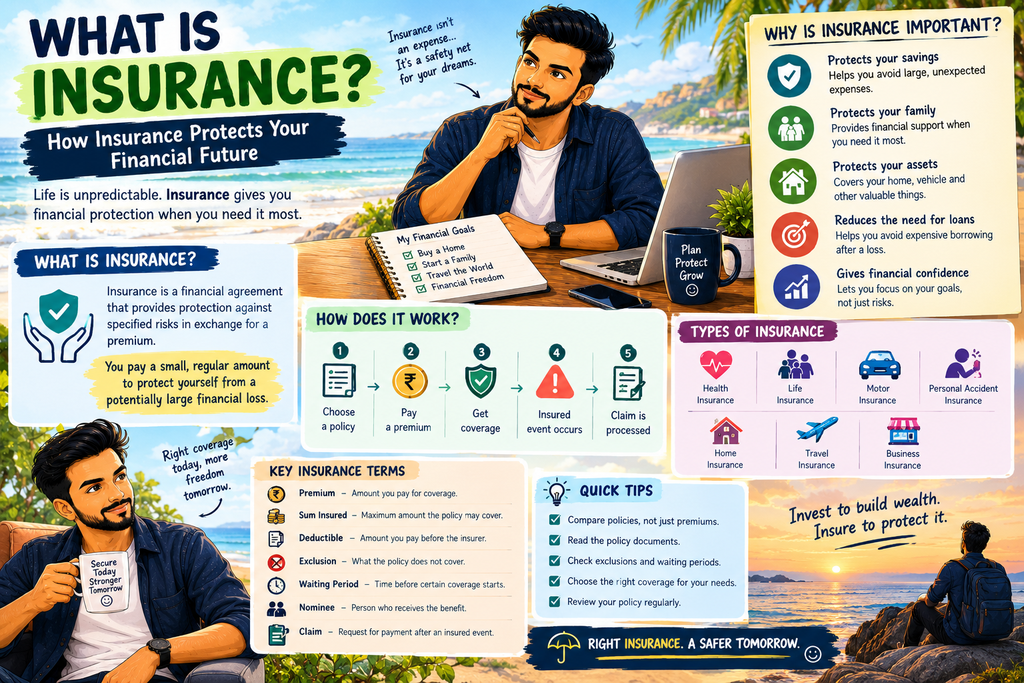
Table of Contents
What Is Insurance?
Insurance is financial agreement that provides protection againstspecified risks in exchange for preminum.
In simple words:
You pay a small, regular amount to prodect youself from unexpected large financial loss.
Example:
You may pay health insurance premium every year. the insurance company may pay egible all expense according to your policy.
How Does Insurance Work?
Insurance works 5 simple steps:
1. You choose a policy
tou selct type of protection you need, such as health, life or vehicle insurance.
2. You pay a premium
a Premiunm is a amount you pay for keep active policy.
It may be paid monthy, or yearly depends on the policy.
3. The policy provides coverage
The insurance company agrees to to cover your speciified risk under the policy.
4. An insured event occurs
Example:
- The policyholder dies during policy period.
- Vehicles damage in a accident.
- Medical expense cover at hospitized.
5. A claim is processed
The Policyholder or nominee submit a required documents. If the claims get approved the isnurar get pay as per policy conditions.
What Is Sum Insured?
The sumInsured is the maxmium amount an insurance policy may cover for particular insured risk to the policy terms.
Example:
if you have health insurance suminsured upto 5 lakhs, the policy may cover eligible medical expense upto that amount.
Actual Payment may depends upto:
- Deductibles
- Sub-limits
- waiting period
- approved treatment costs
- Remaining coverage
Alwys read the policy documents before buying policy.
What Is a Premium?
A Premium is a amount you pay to an isnurance company for coverage
Premium amount depand on factors like:
- Age
- Health condition
- Coverage amount
- Policy duration
- Type of insurance
- loacation
- Occupations
- Previous claims(if any)
- Lifestyle
the most important factor is whether the coverage suit as per needs.
lower premium doe not means makes a better policy.
What Is Deductible?
A Deductible is the amount you must pay yourself bedore the insurance company begins paying eligible expenses.
Example:
- Hospital bills: ₹1,00,000
- Deductible: ₹10,000
- Egible amount paiud by insurer: ₹90,000
The actual calculation depends on policy
A higher deductible may reduce the premium but it also means you pay more from your own pocket during claims.
Types of Insurances
The most common types of insurances:
- Health insurance
- life insurance
- Motor insurance
- Personal accident insurance
- Home insurance
- Travel insurance
- Business insurance
1. Health Insurance
Health Insurance helps cover medical expense according to your medical terms.
It may coverage for:
- Hospitalisation
- surgery
- cetain treatments
- Pre and Post hospitization expenses
- Ambulance expenses
Why Is Health Insurance Important?
Medical expense can be unpredentable and expensive.
A suitable health policy protecct you from heavy expensive bill and your savings.
What to check:
- Sum insured
- Networks hospital
- Waiting period
- Room rent limits
- Co-payment
- exclusions
- claim settlement ratio
- Renewal conditions
2. Life Insurance
Life isnurance provides fiancial protection to the nominee if the insured person dies during policy peiod.
it is important for people who have:
- Dependents
- Family pesponsibilities
- Children education goals
- A spouse who lies on their income
Term insurance
Term life prvide life coverage for a specfied period.
it genrally focus on protection rather than saving or investment.
When choosing insurance, consider:
- Number of dependents
- future education cost
- policy duration
- Premium affordability
- Income replacment needs
3. Motor Insurance
Motor isnurance protects against certains risk related to your vehicles.
it may covers:
- Accidental damages
- fire
- theft
- third party liability
- Natrual disasters
Veicle repairs and third party claims can create signifiant expenses. motor insurance helps reduce the financial impact of covered events.
Before puchasing compare:
- third party coverage
- own coverage
- isnured decaled value
- deductible
- add on covers
- claim process
- claim ratio
- network garages
4. Personal accident Insurance
Personal Accident isnurance may provides fiancial benfits
for specfied accential or death such as:
- Accidental death
- perment diabities
- Partial Diability
- Tmeporary Diability
- Accidental related Expenses
This type of insurance can be useful beause of accident may affect your income and your ability to work.
5. Home Insurance
Home insurance may portect your house or belonging against certains risks.
it may Cover
- fire
- theft
- natural disaster
- structural damage
- household
- certain personal liabilities
Home owners and tenants may nedd different types of policies.
6. Travel Insurance
Travels Insurance may provide protection during domestic or international travels.
Possible benefits include:
- Medicial Emergencies
- trip cancellation
- loast baggage
- travels delays
- passport loss
Coverage differs between policies and destinations.
7. Business Insurance
Business insurance helps protect businesses aganist certain fiancial risks.
It may covers:
- Property damage
- employee relted risk
- theft
- equipment damage
- business interruption
the right policy depends on risk and size of the policy.
Insurance vs investment
Insurance and investment serve different purposes.
| Feature | Insurance | Investment |
|---|---|---|
| Main purpose | Financial protection | Wealth creation |
| Primary benefit | Reduces financial risk | Builds wealth over time |
| Example | Health insurance | Mutual fund |
| Return expectation | Protection according to policy | Potential financial growth |
| Main focus | Risk management | Long-term returns |
A common financial mistake is buying a product only because it promises both insurance and investment without understanding the costs, returns, and coverage.
The right choice depends on your goals and financial situation.
Why Insurance Is Important for Financial Planning?
Insurance is important of complete fiancial plan because it protects the waleth tou are building.
1. Protects your savings
A major medical bill or accident can reduce your savings.
2. Protect your Family
Life insurance helps dpendents manage expense if primary earner dies.
3. Protect your assets
Motor or home insurance can reduce the fiancial impact of certain financial damages.
4. Reduces the needs for expensives loans
Insurance may help you avoid borrowing after an unexpected events.
5. Provides financial Confidence
Proper coverage helps you to focus on our long-term goals without worrying and financial emergencies.
How Much Insurance Do You Need?
There is no single amount suitable for everyone
Tour coverage should depend on:
- Age
- SIncome
- Family Reponsibilities
- Saving
- Health risk
- No. Of dependents
- Futuer financial goals
- Existing Insurance coverage(if any)
For Life Insurance
Amount your family need to manage
- Daily expense
- loans
- education
- housing
- Future financial goals
For Health Insurance
- Local hospital cost
- family size
- Medical history
- Employer coverage
- Rising healthcare cost
Review the coverage when your income, family or repsonsibilities change.
Employer Insurance vs Personal Insurance
Some employer provide health or life insurance benfits
Employer coverage can be useful, but it may not always enough.
Employer Insurance
Advantges:
- affordable
- convenient
- may cover employee or dpendnets
- premium may be partly paid by the employer
limititation:
- Coverage may be limited
- policy terms may not controlled by you
- policy ended when you leave the job
Personal Insurance
- you contol your policy
- you choose your suitable sumisnured
- it may provide lomg term contiunity
Important Insurance Terms
Policyholder
The Person who owns the Insurance policy.
Insured
The person or asset covered by the policy.
Nominee
The person named to receive eligible benfitsunder policies.
Claim
A request made to the insurer for payment or cover age bills after unexpected events.
Exlusion
A expense that policydo not coverge under the policy.
Waiting Period
A period that policy will cover not available.
Co-payment
the percentage of an alegible claims paid by policyholder.
Grace Period
Additional time allowed to renwal the policy after a due date subject to policy terms.
Claim settlement
The process through wjich an insuruer reviews an dpays an approved claim
Common Insurance Mistakes
Buying only the cheapest policy
A low premium may come with limited coverage and less benefits.
Not reading the policy documents
always understand what is covered and what is not covered.
Hiding Important information
Incorrect or incomplete information can reduce your claim.
Buying too little coverage.
Insufficient coverage may not protect you when you needed the most.
Ignoring policy renewal
A policy may lapsed if premium will not paid as policy period.
Depending entirely on employer insurance
Your coverage may change when you change jobs.
buying isnurance only for tax benefits
Tax benefits should not be mains reason to buy insurance policy.
Not Reviewing coverage
Your insurance may required after marriage, children, new loan or increase salary.
How to Choose the Right Insurance Policy
Step 1: Identify your risks
Think aboutthe risks that could create fiancial problems.
Step 2: Check your existing coverage
review your employerinsurance, existing policy and government benfits.
Step 3: Decide the rquired coverage
estimate the fiancial support your family and asset may need.
Step 4: Compare policy terms
Compare:
- Coverage
- Premium
- exclusion
- deductibles
- waiting period
- claim process
- claim settlements ratio od precentage
Step 5: Read the policy documents
Do not rely on written or vernal promisies.
Step 6: Review the policy regularly
update your cpoverage when fiancial repsonsibilities changes.
FAQs
Is insurance necessary for everyone?
the types and amoutn of insurance dpendon your risk, income, assets and responsibilities. most people should cosnider protection aginst major financial risks.
Is health insurance important if i am young?
Yes. health emrgencies can happen to any age and buying coverage earlier get more benfits.
Is Life isnurance necessary if I have no dependents?
You may have less immediate need for life insurance, but your situation changes in future . cosnsider future responsibilties, loans , family.
Is Insurance an investment?
Insurance primarily provides protection. Some insurance ploicy parts gives investment but get more returns and very less coverage.
What happens if I Stop paying Premiums?
the policy became inactive or collapse depending on your policy terms.
Can I Have more than one Insurance Policy?
Yes. You may have mulitple policies but benfits and claims rules depend on the types of insurance and policy conditions.
Link this article to:
- What Is Money? Meaning and Importance of Money
- What is Financial Literacy?
- Financial Literacy Vs Financial Education : What Is the Difference?
- What Are The 5 Main Areas of Personal Finance?
- What Is Financial Planning? A Beginner’s Guide
- What Is Money Management? A Beginner’s Guide
- What Is an Emergency Fund?
- What is Saving?
- What is Compound Interest?
- What Is Inflation?
- What is Income?
- What is an Expense?
- What is Budget?
- What is Investing?
- What is Net worth?
4 thoughts on “What Is Insurance? How Insurance Protects Your Financial Future”