
What Is a Budget? A Beginner’s Guide
Have you ever wondered where your money went by end of the month.
You may start month with enough money, but after essential expenses, paying bills and spending in shopping every month and end of month left like nothing.
One simple tool that help you understand and plan your money is budget.
A budget is a plan that tells you how to use your money.
It helps you to how much money you can spend, save and use for financial.
Budget is not about stopping from spending money.
Deciding where your money should go before you spend it.
Table of Contents
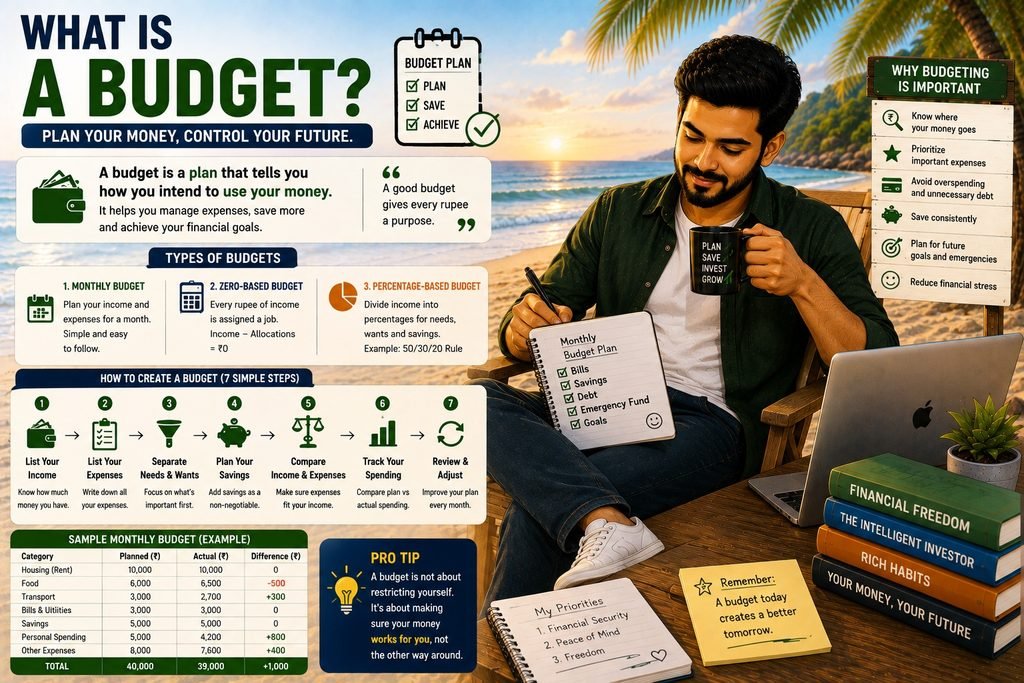
What Does a Budget Mean?
A budget is plan for you income and expenses for short duration like month.
Example
₹50,000 per month
- rent
- food
- bills
- Transportation
- Saving
- Personal expenses
- insurance
there is no such sibgle budget for everyone.
The purpose is to give your money clear way.
Why Is Budgeting Important?
Budget gives you clearity using of your money.
1. A Budget Shows where Your Money Goes
without a budget you do not know your monthy salary where get spend.
When you create a budget, every spend have it own categories.
- Food
- Online Shopping
- Subscriptions
- Wants
Once you figure it out you get your number where you could less spend on it.
2. A Budget Helps You Priortize Expense
Not every expense has have same improtance.
budget helps you priotize you expense.
Higher Priority
- Rent
- food
- bills
- Transportation
- Loan EMIs
Lower Priority
- Enterainment
- Personal wants
- Subscription
- Eating out
It simply means you should prioritize your expense first and after rest of it.
3. A Budget Can Help You Save
Saving become easier when you create a budget and include in it.
Example:
Income: ₹50,000
Spending the enire amount and saving whatever remains you can includes
Planned saving: ₹5,000
saving part of your financial plan.
the amount you save should be realistic as per personal situation.
4. A Budget Can Helps You Avoid Overspending
Lets say you plan to spend ₹7,000 for dinning out, shopping and enterainment, etc.
Once you reach this amount you automatically stop spend in this category.
this creates a simple boundary for uour money.
A Budget helps you become more aware before spending.
5. A Budget Helps You Plan Ahead
Budget isn’t only helps for today’s expense.
It’s also helps to prepaare for future expense.
Example
let say you have annually isnurance perminum every year
In three months you have to pay in full payment. So one timw wholly payment will shake your financial situation.
So you keep it in budget in advance before payment date come you keep aside some amount for insurance plan.
Preparing you today for tomorrow’s financial situation is budget.
What Are the Different Types of Budget
There is no such single budget types.
Common bduget plan:
1. Monthy Budget
This is simplest budget for beginner.
Create a Plan for single month of income and expense.
monthy salary person create easy by this types of budget to understand and maintain.
2. Zero Based Budget
In zero based Budget, every money of income for planned budget.
Example:
Income: ₹50,000
You allocation all money ₹50,000 like:
- Rent
- Expense
- Debt EMIs
- Enterainment
- Subscription
Money Allocated to saving and EMIs repayment is also purpose.
3. Percentage -Based Budget
Budget divided into percentage based from income.
Categories:
- Need
- Wants
- Saving or Invest
Very Popular and famous Framework 50/30/20 rule in budget.
Genrally
- 50% Needs
- 30% Wants
- 20% Saving and Invest
This may change in Categories based on income, expense, debt and financial situation.
Don’t force your life into a budgeting rule that suit you financial situation.
Fixed Vs Variables Expenses
Understand your fixed and variable expenses
Fixed Expenses
This expense is fix and can’t change every month to month and can’t change in this expense.
Example:
- Rent
- EMIs
- Fixed Transportation
- Groceries
Rent= ₹12,000 every month
Variable Expense
These expense is change time to time.
Example:
- Dinner out
- Subscription
- Fuel
- Shopping
Example:
- January Outing = ₹2,000
- Febuary Outing = ₹2,750
- March Outing =₹3,000
Create a Budget with types of expense in mind with realistic way.
How to Create a Budget Step to Step
You can use spreadsheet, note book. You don’t require of apps or software for it.
Step 1: Write Down Your Income
Start with your expected income.
Example:
Salary = ₹50,000
If your Income change every month assume it like lesser amount so if less money comes to your account you adjust in your budget plan.
Step 2: List Your Expenses
Write down all your expenses includes all fixed and variables expenses.
Example:
- EMIs
- Rent Food
- Transport
- Bills
- Shopping
- Outting and Enterainment
Tiny expense also to included into it.
Separate your Wants and Needs
Divide into Needs and wants
NEEDS
- Rent
- Food
- EMIs repayments
- Transportation
This are important and non-neogotiable every month.
WANTS
- Subscription
- Dinning out
- Shopping
These are unimportant can be ignore and set into next month budget.
By this approach you get flexibility in your budget and piroritize.
Step 4: Add Savings to Your Budget
Decide your realistic amount of saving.
Example:
Monthy Income = ₹50,000
Saving = ₹5,000 with purpose
This is low but realistic amount you to save every month.
- Emergency fund
- Short-term goals
- Long-term goals
Step 5 Compare Your Income and Expenses
Income – expense = Remaining Money
Example
₹50,000 – ₹5,000 = ₹45,000
If you have money left, you can decide use in saving, Loan repayment and other financial goals.
If your expense cross than income, then you has to reconsider your budget and chsnge into it.
- Reduce unimportant spending
- adjust your plan
- review your loan
- reduce unwanted purchase
Budget gives you visvible problem in your financial plan.
Step 6: Track Your Actual Spending
Beginning is to create a Budget.
you need to compare your planned and actual spending.
| Category | Planned | Actual |
| Food | ₹6,000 | ₹6,750 |
| Dinning Out | ₹5,000 | ₹6,550 |
| Transport | ₹4,500 | ₹5,250 |
| Shopping | ₹6,000 | ₹8,000 |
Now easily it visible that you has spend more or less than planned.
this simple gives idea to create a budget next time better.
Step 7: Review Your Budget
At end month, ask yourself:
- did i stay with my budget?
- where I spend more than planned?
- Which expense I can Reduce?
- Did I save Some money?
- which Unwanted purchased I made?
Budget and financial journey continous and learning process.
first budget is not your final budget and it should not be perfect.
A Simple Monthy Budget for Beginners
let’s say someone income is ₹50,000
| Category | Amount |
| Essential expense | ₹20,000 |
| Saving | ₹6,000 |
| Debt Repayment | ₹10,000 |
| Personal expense | ₹5,000 |
| other expenses | ₹9,000 |
| Total | ₹50,000 |
this just a example.
Everyone life is different from others.
so, rent may increase need to vary change in budget.
Someone living with parents there expense also low.
Your budget gives reflection of your actual life.
What If You Cannot Save Money?
Sometimes your income may just enough to cover your important expnese.
In that situation, you had create unreal budget without any certain percentage allocate in your budget.
First look into budget
Where is my budget going?
look for realistic opportunity
- Reduce unnecessary Expenses
- stop unwanted subscription
- Campare your bills
- Avoid impulse buying
- look to increase your income
Build saving habit with small amoutn intially.
Common Budgeting Mistakes
Making a Budget and Never Checking It
A budget only become useful when start compare your expected expense with actual expense.
Forgetting Small expense
Small Purchase later added.
Making Budget too Strict
A budget with cut to cut allocate money is too difficult keep on track.
Copying someone’s Budget
Your income and expense is different from someone life. Create you own budget according to your cricumstances.
Giving Up Afte One Bad Month
Overspending is not mean that you has bad budget or fail in your financial journey.
Learn from it and review recreate with new budget.
Budget Vs Money Management
these Term are connected to each other but not exactly same meaning.
Budget
Budget is a plan for how to use your money.
Money Management
Money Management is a process to handle your income, expense, saving, Budgeting and managing debt.
Simple way
Budget = your money plan

Money managment = how to manage your money overall
FAQs
What is Budget?
A budget is a plan that tells you how to use your income for expense, saving and other fincial purchases.
Is budgeting only for People with Low Income?
No. Budgeting cane be useful at any income level because everyone needs to decide how use your money effective way.
How often shoul I make a Budget?
A Monthy budget is simle starting point for many people, who recieve salary monthy.
Can I change my Budget?
Yes. Budget should be flexible. so that you can adjust your unexpected expense can fit into it.
What is the easiest way to start budgeting?
Start with three things
- income
- list your expense
- decide where to save
Track and review your budget with actual spending.
Link this article to:
- What Is Money? Meaning and Importance of Money
- What is Financial Literacy?
- Financial Literacy Vs Financial Education : What Is the Difference?
- What Are The 5 Main Areas of Personal Finance?
- What Is Financial Planning? A Beginner’s Guide
- What Is Money Management? A Beginner’s Guide
- What is Saving?
- What is Income?
- What is an Expense?
- What is Budget?
- What is Saving?
- What is Inflation?
- What is Investing?
One thought on “What Is a Budget? Meaning, Types & How to Create One”